
Caps 217 and 218: Cricket's Real Crisis Is Identity, Not Names
**कोर उत्तर (≤60 शब्द)** विस्डन क्विज़ भारत के पुरुष टेस्ट कैप 217 और 218 का साझा नाम पूछती है और उत्तर नहीं देती। कैप संख्याएँ BCCI द्वारा डेब्यू क्रम में द
Delhi, one office night. Forty hours before an auction, I had a spreadsheet open in front of me — death-over economy for every quick, wickets per powerplay ball, strike rate against spin on older grounds. The formula was right. No cell threw an error. And the output was still wrong. One row carried the name Mohammed Shami and the numbers pulled from Mohammad Sami's record. Both right-arm quicks, both names that sound identical to the ear, both careers run in different countries. The sheet did not care. Sheets run on names, not on people.
That night I added a column to the file: date of birth. Then a second: bowling type. Then a third: team. This was not a data-science breakthrough. It was an admission that a name is not a key. A name is a sound.
Last week Wisden published a quiz: what name do India's men's Test caps 217 and 218 share? I read the question and saw the same spreadsheet. A large part of what we call cricket knowledge is really identity management — and that management is not properly recorded anywhere in our systems.
Context: what this quiz is, and what it is not
This Wisden question is an engagement product — trivia, not reporting. I broke the source into thirteen information points. Not one of them is a performance datum. No innings, no scoreline, no economy rate, no average, no toss, no DLS, no DRS controversy, no venue, no pitch report. The answer is not given either. The question is asked and abandoned.
There are only two professional responses to a source like this. The first is to manufacture depth — to write something like 'the psychology of caps 217 and 218', which would contain zero cricket and one hundred per cent words. The second is to admit that the genuinely analysable thing here is not cricket but cricket's record system. I am taking the second route, because the first comes from exactly the habit that produces auction sheets which turn Mohammad Sami into Mohammed Shami.
The quiz's scope is deliberately wide — Test, ODI, T20, women's internationals, English County Championship. The namesake theme is format-agnostic. That breadth is also its biggest hazard.
The operative rule is strict: a namesake means an exact match. The article itself explicitly excludes four pairs — Mehidy Hasan against Mahedi Hasan, Claire Taylor against Clare Taylor, Abdul Razzaq against Abdur Razzak, and Mohammad Sami against Mohammed Shami. Alongside those sit three worked examples: two Ollie Robinsons, two Daryl Mitchells, and Zaheer Abbas against Syed Kirmani.
India's Test cap system is simple. The BCCI assigns each new Test player a sequential number. Cap number one is Lala Amarnath, 2026. The number records entry order, not performance. The entire quiz rests on that entry order, and that is its weakest link.
Core: not namesakes, but identity resolution
The quiz's real subject is not namesakes. It is identity resolution — the ability to keep two people with one name in two separate rows. And without saying so, the quiz also demonstrates why role and bowling type belong in their own structured fields.
The most instructive part of the quiz is not its inclusions. It is its exclusions. Inclusions are trivia. Exclusions are operational experience.
The first exclusion: Mehidy Hasan Miraz and Mahedi Hasan. Both Bangladesh spinners, both used as all-rounders, born three years apart. Mehidy Hasan debuted in Tests against England in 2026 and took 19 wickets in that series; Mahedi Hasan's international career has been mostly in the shorter formats. Team filter does not help here. Format filter does not help. Role filter does not help. What is left is spelling and date of birth.
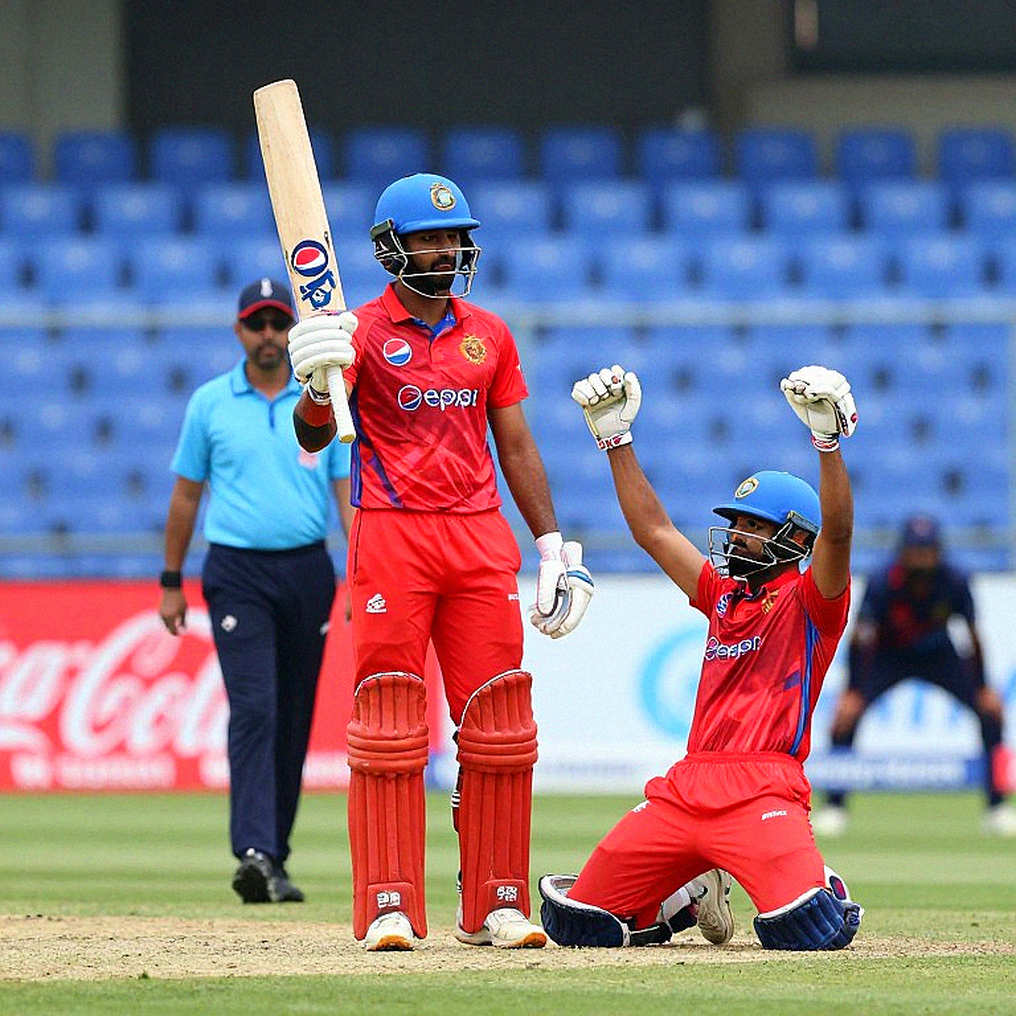
The second exclusion: Claire Taylor and Clare Taylor. This is the most dangerous pair in the entire set, because they cannot be separated by team, by gender, or by format. Both are England women's internationals. Claire Taylor was named a Wisden Cricketer of the Year in 2026 — the first woman to receive that honour. Clare Taylor also played football for England. One country, one gender, overlapping decades, one vowel of difference. Any name-keyed database will break on this pair.
The third exclusion: Abdul Razzaq and Abdur Razzak. The difference here is not just nominal, it is functional. Razzaq was Pakistan's right-arm fast-medium all-rounder — 46 Tests, exactly 100 wickets. Razzak was Bangladesh's left-arm orthodox spinner. If a model pools these two into one row, both its economy baseline and its matchup baseline break at the same time — because one is a seamer and the other is a spinner. That is the error cricket analytics forbids outright, and it sits plainly inside the quiz's exclusions.
The fourth exclusion: Mohammad Sami and Mohammed Shami. Both right-arm quicks, similar enough in style that the eye slides past the difference. Shami's 229 Test wickets came for India; Sami's 85 for Pakistan. Two countries, two systems, two opponent-quality curves — one name key.
Now the inclusions.
Two Ollie Robinsons. One born 2026, right-arm quick, Sussex to England, Test debut at Lord's against New Zealand in 2026. The other born 2026, wicketkeeper-batter, Durham and then Kent. One country, one domestic system, one decade. These two are separated by role, not by name — which is the proof that role is a field, not a footnote.
Two Daryl Mitchells. One born 2026, Worcestershire captain, top-order batter in the County Championship. The other born 2026, New Zealand middle-order batter. Mitchell Santner's joke was built on this pair, and a joke only lands when both men are contemporaries in the same professional ecosystem; a pair separated by decades carries no comic force. Here the resolution comes from team and format.
The third example is the most technical — Zaheer Abbas and Syed Kirmani. Zaheer Abbas's full name was Syed Zaheer Abbas Kirmani. He chose to use his middle names. This is not an alias created by a database. It is an alias created by the player himself — and that is exactly why historical records need an alias field rather than a single name string. Syed Kirmani kept wicket for India from 2026 to 2026, 88 Tests, 198 dismissals. Two contemporaries, two countries, and a name overlap that would confuse any search engine.
Now the mechanism the quiz stands on: the cap number.
Cap numbers are sequential and debut-driven. The direct implication is that 217 and 218 very likely belong to two players who debuted in the same Test, or in consecutive Tests. That inference is sound, and it narrows the search space sharply.
But one thing needs saying plainly. A cap number is an administrative order of entry, not a certificate of merit or of era. When two players debut in the same match, their numbers split by list order, not by any cricket logic. Reading a player's tier or generation off a cap number is like reading a student's talent off a roll number.
And here the quiz's most honest feature appears: it withheld the answer. So will I. I do not hold the cap register. I do not hold a verified debut-date list. Answering from inference is precisely the habit that produces 'death-over specialist' labels built on forty-ball samples. The answer here is not a question of knowledge but of query. Whoever has the register settles it in two minutes. Whoever does not, is guessing — and printing a guess as fact is the oldest dirty habit in this trade.
Where this costs money
A name-keyed mismatch costs one point in a quiz. In an auction room it costs a price.
IPL auction lists and franchise shortlists run on names. In a scouting workflow where one column says Shami and another says Sami, the scrolling finger is fast and the verification is slow. Fantasy rosters, endorsement attribution, historical trend charts — the name is the key in all of them. The three columns I added to my sheet were not part of an algorithm; they were a way of admitting my key was weak.
A new twist arrived in 2026 with the Impact Player rule, which shrank the effective sample further — a bowler's death overs in a season are now measured on fewer balls than before. Add an identity error inside that already-small sample and what survives is not edge, it is noise. The 4% looked like edge. It was noise wearing a suit.
That is why dismissing a namesake quiz is a mistake. It is an audit in entertainment clothing. Any system where two people share a name and where date of birth, role and bowling type are not separate fields will fail every time — however good the model on top of it.
Contrarian: exclusions tell you more than inclusions
The collective posture of the serious analyst is that quizzes sit below analysis, and that the real work happens in xG, economy models and matchup grids. I disagree, and I have the receipt.
Look at what the quiz chose. Four exclusions — Bangladesh, England women, Pakistan-Bangladesh, Pakistan-India. Four different failure modes, four different geographies. No editor lists four exclusions by accident. He lists the errors he has actually watched happen. The inclusions are trivia; the exclusions are the audit trail. And that audit trail told me more than the rest of the piece combined.
Second. We all know the wrong lesson India learned after the Ahmedabad final of November 2026. The process was defensible, the result was variance, and the story became 'collapses under pressure'. The namesake quiz carries the same risk. If I sat down and produced an answer to caps 217 and 218 from inference, I would commit the exact error the commentary box commits daily — filling the space where evidence is absent with confidence. The commentary box remains the last unaudited desk in this sport, still trading in milestone worship and momentum talk. I do not want to become that desk.
Third, and this cuts deepest. The quiz's question is not really about a name. It is about what we think we know. Hearing 'India's 217th Test cap', no analyst's mind produces a name; it produces a confidence that the information exists somewhere. The quiz exposes that confidence. I built the Oval model to win an argument. It won. That was the problem. Winning does not validate a model; validation comes later, when the sample grows. Here the sample is zero. And where the sample is zero, the most honest answer is 'I don't know'.
Takeaway
When 2026 auction prep begins, I will be watching whether franchise scouting sheets and fantasy apps carry date of birth, role and bowling type as separate columns beside the name. The day they do, Mohammad Sami and Mohammed Shami will not merge again. Until then, one question: if a joke quiz has to withhold its answer, on what confidence do our match previews print theirs?